Campus life is often sold as a time of freedom, fun, and self-discovery. For many students, it is exactly that. New friends, social events, late nights, and the feeling of finally being on your own.
At the same time, university demands discipline: deadlines, lectures, exams, and long-term consequences for short-term choices.
Most students don’t struggle because they don’t understand this tension. They struggle because no one really teaches them how to live inside it.
This guide is about balancing campus life and discipline in a way that lets you enjoy being a student without quietly sabotaging your degree.
Why Campus Life and Discipline Feel Like Opposites
When students arrive on campus, structure changes overnight. At school, bells, teachers, and parents enforced routine. At university, freedom arrives faster than self-management skills.
Campus life rewards:
- being socially available
- being spontanious
- saying yes
- and fitting in
Discipline requires:
- saying no
- planning ahead
- delaying gratification
- choosing discomfort now for relief later
These values clash, especially in the first and second year.
The mistake is thinking you must choose one side permanently. You don’t. The goal is seasonal balance, not constant restriction.
Discipline Is Not the Absence of Fun
Many students believe discipline means cutting off social life completely. This belief often leads to two extremes:
- over-restriction, followed by burnout
- over-indulgence, followed by panic
Discipline is not about avoiding enjoyment. It’s about deciding when enjoyment is earned and when it becomes expensive.
Going out occasionally is part of campus life. Going out when you’re behind, exhausted, or avoiding work usually creates more stress than relief.
True discipline reduces anxiety instead of increasing it.
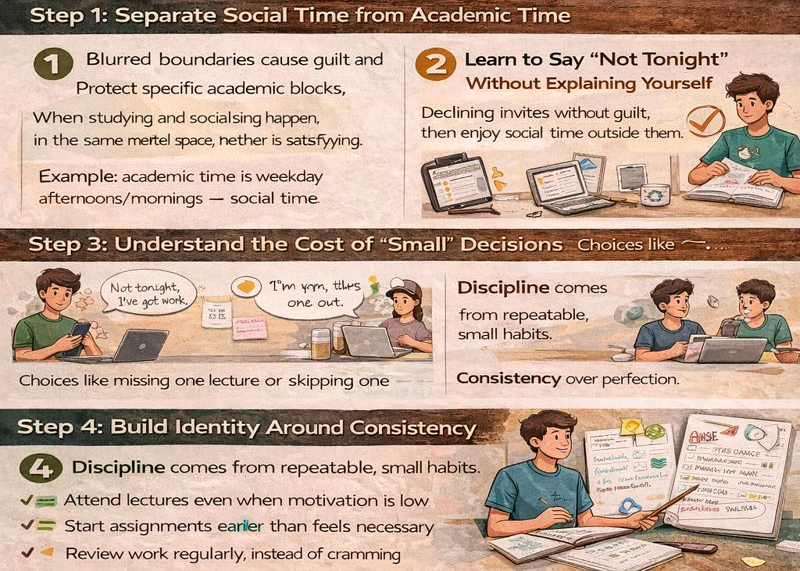
Step 1: Separate Social Time From Academic Time Clearly
Blurred boundaries cause most problems.
When studying and socialising happen in the same mental space, neither is satisfying. You feel guilty while relaxing and distracted while studying.
A healthier approach:
- protect specific academic blocks
- allow guilt-free social time outside those blocks
For example:
- weekday afternoons or mornings → academic focus
- selected evenings or weekends → social time
This separation makes both parts more enjoyable and sustainable.
Step 2: Learn to Say “Not Tonight” Without Explaining Yourself
One of the hardest skills on campus is declining invitations without guilt.
You do not owe long explanations for choosing rest, studying, or quiet. Over-explaining often signals insecurity and invites pressure.
Simple responses work:
- “Not tonight, I’ve got work.”
- “I’m sitting this one out.”
- “I’ll join another time.”
Discipline grows when decisions are made calmly, not defensively.
Step 3: Understand the Cost of “Small” Decisions
Campus life often normalises habits that feel small but add up:
- missing one lecture
- submitting one assignment late
- staying out one night too many
- postponing revision repeatedly
Individually, these seem harmless. Collectively, they create academic debt.
Discipline is the ability to notice when “just this once” is becoming a pattern.
If things already feel out of control, this guide on how to regain structure when everything feels messy as a student can help stabilise things before they spiral further.
Step 4: Build Identity Around Consistency, Not Perfection
Many students wait to be disciplined “next week” or “next semester.”
Discipline does not come from dramatic turnarounds. It comes from small, repeatable behaviours:
- attending lectures even when motivation is low
- starting assignments earlier than feels necessary
- reviewing work regularly instead of cramming
Consistency builds confidence. Confidence makes discipline easier.
Learning how to stay consistent without burning out helps students maintain discipline without turning university into constant pressure
If burnout is creeping in, learning how to stay consistent without burning out matters more than pushing harder.
Step 5: Choose Your Environment Carefully
Your environment trains your behaviour.
If everyone around you:
- skips lectures
- treats deadlines casually
- normalises constant partying
discipline becomes harder, even if you’re capable.
This doesn’t mean abandoning friends. It means:
- studying with people who work
- limiting exposure during high-pressure weeks
- choosing spaces that support focus
Environment is not destiny, but it is influence.
Step 6: Accept That Balance Shifts During the Semester
Balance is not static.
There will be periods where:
- discipline dominates (tests, exams, deadlines)
- social life takes a back seat
There will also be lighter periods where:
- social time expands
- structure relaxes slightly
Problems arise when students treat the entire semester the same.
Mature discipline adapts to academic seasons instead of fighting them.
When students are also working to survive, choosing income options that don’t destroy academic focus becomes part of discipline. This guide on ways students can make money while studying in South Africa explains safer approaches.
Step 7: Remember Why You’re There
Campus life is temporary. The consequences of academic failure often aren’t.
This does not mean living in fear. It means staying anchored to why you registered:
- future opportunities
- financial investment
- personal growth
- breaking cycles
Discipline protects those reasons.
When Balance Breaks Down
Sometimes balance collapses despite good intentions. That does not mean you’ve failed.
It means something needs adjustment:
- workload
- expectations
- routines
- support systems
Ignoring warning signs usually makes recovery harder.
Pausing, recalibrating, and re-establishing structure is a strength, not weakness.
For a broader framework that connects academics, discipline, tools, and campus life, this student survival guide in South Africa brings everything together.
My Final Thought: Discipline Is Freedom Delayed, Not Denied
Campus life is meant to be lived. Discipline is meant to protect that life from long-term regret.
You don’t need to become rigid.
You don’t need to disappear socially.
You don’t need to be perfect.
You need enough discipline to stay registered, stay progressing, and stay mentally intact.
When discipline and campus life work together, university becomes demanding — but meaning